US states with the fewest Tesla Superchargers
0
Alaska
Arkansas
Hawaii
Maine (Permit issued for Augusta)
Mississippi
Nebraska
North Dakota
1
Delaware
Iowa
Rhode Island
West Virginia
2
Kentucky (permit for #3 has been issued)
Louisiana
Pennsylvania (construction has begun for two more)
South Carolina
Vermont
3
Alabama
Idaho
Missouri
New Hampshire
South Dakota
Tennessee
4
Indiana
Massachusetts
Michigan
Oklahoma
Wyoming
5
Connecticut
Georgia
Kansas
Minnesota
North Carolina
Washington
16 November 2015

17 October 2015
Facts, Opinions, and Theories.
A fact is something which is objectively true. Two plus two is four. The earth is roughly spherical. President Obama was born in Hawaii in 1961, roughly two years after it became a state, to a mother born in Kansas. There are also false facts: things which are objectively false. Two plus two is seven. The earth was created roughly 6000 years ago. Liberalism is the same thing as communism and is also the same thing as fascism. The founders were a pack of gun toting anti-government, anti-tax, bible thumping activists.
An opinion is an attitude or belief about something which may be difficult to validate, or about which your opinion is really of no consequence to anybody but yourself. I think there is probably life elsewhere in the universe. Blue is a better color than Red. Fangio was a better driver than Schumacher. You can have opinions about facts. It's sad that our bodies wear out as we get older. It's annoying to pay taxes. An opinion is sort of a middle ground, between true and false facts. Opinions are sometimes validated or invalidated as we learn more about things.
Since there are a lot of things that are difficult to validate, a lot of people have opinions which may actually be facts or false facts. For example, you may think that Obama is a Kenyan terrorist. You are entitled to think anything you like of course, but if that's your belief, you are simply wrong, and acting on that belief in some way may be harmful. If you think that government tightening its belt during an economic downturn is an unquestioned necessity, you are simply wrong. It may be a little too complex for a lot of people to understand. So was the roundness of the earth before circumnavigations or satellite photos. But lots of people did understand that and knew the truth in the face of popular belief to the contrary.
A theory is an idea about the way some particular thing works in the universe. Theories can be true, false or opinion. The theory of the flat earth proved to be false. The theory of evolution proved to be true. The theory of universal gravitation is basically true, but it turns out to be more complicated than that. The theory that there is life elsewhere in the solar system remains possible but is as yet unproven one way or the other, so having an opinion either way is reasonable. The word "theory" is sometimes used to cast aspersions on a fact that the speaker is unhappy about. Not liking a theory has no bearing on whether it's true or false, nor does misunderstanding what the word means. It may have an impact on the politics around a theory, which may affect funding for research or even lead to ostracism. Thinking that something true is false or vice versa, is likely to lead you to make strategic errors.
01 October 2015
Team Names
When I was growing up, the nearest division I college sports teams were the Stanford Indians. This was a commonplace sort of team name and seemed an entirely positive reference: the athletes were purporting to have the properties of native Americans: Strength, endurance, team spirit, aggressiveness, loyalty, etc. The college across the bay (which I later attended) were the Bears. More independent perhaps, but strong, aggressive, etc. The high school I went to were the "Pioneers": independent, far sighted. Beavers, Ducks, Huskies, Vikings, Mustangs, Matadors, Chargers, Cowboys. These were all meant to be positive references. Not really taken seriously as actually representational, just symbols to have on a flag.
In 1972, Stanford decided to drop the indian mascot. They struggled for a little while trying to find a replacement, temporarily using the team's primary color, Cardinal Red, and calling themselves the Stanford Cardinal. 40 years later, they've given up finding a new mascot and have stuck with the color. This made no sense to me at the time: the Indian mascot was an entirely positive and honorable allusion. Why should real indians complain?
One trouble is, the stereotypes about a few of these have them to be marauding bandits. There's some truth to it, but like many marauding bandits, they were driven to desperate measures by economic changes not of their own making*. Worse, there's an implied comparison to animals. But really, that's silly--actual cowboys, vikings, matadors, etc., are not complaining--nor should they. No insult is implied or intended.
The difference is that native Americans are still subject to real racial prejudice. The people who are being touchy about mascots named for them are trying to get attention for a real cause. It's not really the team name at all. They are trying to get better treatment for indians--on reservations, in impoverished sections of cities, and so forth. A lot of indians are trapped in a cycle of poverty that is very difficult to break out of. Horrible things have been done to them. Being touchy about team names is nothing more than a way of getting attention. A PR campaign.
There are, of course, lots of people who have confused the PR campaign for a real issue. That's what Stanford did when they changed their team name. This happens all the time. If all the teams changed their names, they would have "won", but it would deprive the native Americans of a real PR asset.
-----------------
* The Norse had a huge population boom that left a lot of people without land, so some of them went viking (it's a verb) to occupy someone elses land. At first scary, they assimilated very well. Angles, Saxons, Normans, Russians all have viking heritage. Indians were on the receiving end of this. The vikings made a colony there too, but were not as successful as they'd been in europe. 500 years later, a new set of immigrants came, but brought devastating disease with them, which made colonization much easier.
30 September 2015
That Which Will Destroy Us
The incident last week of a ninth grader with an Arabic name disassembling a digital clock and passing it off as his own invention to try to impress his teachers is telling, in many ways. I actually did build a digital clock--when I was in the 11th grade, out of SN7490 SSI integrated circuits. When I saw a picture of Ahmed's clock, I knew immediately it could not possibly be a bomb and was certainly not something he'd invented. It had a big LSI chip that handled virtually everything. Ahmed is better at electronics than 90% of 9th graders for being able to take it out of its case without breaking it, but he's passing off the work of a team of professional engineers as his own. Most teachers can't be expected to know enough about electronics to know how to rate a claim of invention, but a teacher that knows so little that they can't tell that there was nothing there that could explode needs to seek another way of making their living.
In a long commentary on facebook, Apple co-founder Steve Wozniak, who was more precocious with electronics than I was, saw the same thing and mentioned how he really got his start in electronics because he had an idea for a prank. He did it and got into trouble--one of his teachers thought he'd made a bomb--unsurprisingly, because the device was meant to sound like one. He learned from this to keep his pranks secret. From the sound of it, his pranks were a little scarier than mine--several of them involved shocking people, and he spent a night in juvie for the fake bomb. Several of my stunts involved pyrotechnics, but I was always very careful to make sure lots of people understood what I was doing, especially my safety precautions. I still have all my eyes, ears and fingers...
Woz also said that "From the most creative people I meet in high tech, I'd suggest that slight misbehavior is an essential ingredient of creative thinking". This is exactly my experience. In fact, I'd go so far as to say, if you don't have at least a little bit of a rebel and scofflaw in you, you have basically no chance of ever doing anything very creative.
The schools today are removing a great many of the exhilarating things from the curriculum. Cuts in the arts and recess are only part of it. I made lots of things that went poof or boom or flash in chemistry lab. I learned a lot from these games. The teacher kept an eye on me and realized that I was probably the safest kid in the class, precisely because I was always looking for ways to have fun and understood, better than most, that these things could hurt me. He even helped offered suggestions for a few of my projects. He was a great teacher. Thanks, Mr. Wong. Today, most of the chemicals I used are gone. I'd have been stymied. Chemistry would have been boring.
Zero tolerance has been one of the most harmful ideas ever imposed upon the school system. Kids get major punishments for bringing toys to school. Kids need to rebel a little. It's what makes them feel different and creative, and in a lot of cases, actually be creative. If you stop the little fun, their only option becomes unsupervised fun. Big fun. Kids doing bad things, things with consequences and that may deserve real punishment. Little fun stays little and it can satisfy kids creative urges if they have enough of it.
Creativity requires rebellion. Doing the same thing over and over is not creative, but it is one of the definitions of insanity. If we stop our kids from being creative, we are over as a nation.
03 September 2015
Trump the Troll part II
Trump is still doing far better than any serious pundit could have imagined, polling in the 20s, by going for the lowest, most racist, most hateful positions. It seems to me that he's capturing all the people who won't vote for any democrat because they're too nice. Today, he has signed a pledge to the GOP that he won't run as a third party candidate and made a speech that he's all in for the GOP. In my previous blog entry on this subject, I suggest that Trump is playing stalking horse for the Democrats. I see nothing to change this view.
Trump's success is only in the GOP and I'm pretty sure is only among GOP voters who are dumb enough to think that bluster and belligerence is helpful when you're playing in the big leagues. It's hard to imagine this is more than 20% of the voters under any circumstances--he'd only have to have about 10% overall support to get poll results he does. In the unlikely event that he actually wins the nomination, he'll get about 30% in the national election from the people who are more loyal to the GOP than sensible, and win only a few small states where there are very few non-republicans: Idaho, Utah, Mississippi and a few others, and lose by one of the biggest landslides in history. Success for the troll.
Because the support is functionally grass roots (even though Trump himself is the very opposite of that), if the more traditional GOP tries to run a third party candidate (Mitt Romney would be my best guess), it will end the GOP, and the defeat will be even more complete. The GOP is dumb, but I don't think that dumb.
Far more likely, the GOP will find some way of kicking Trump out of the process. Almost no matter how this happens, Trump will call foul and today's "pledge" will be torn up (and a few borderline people will turn against the GOP over this) Trump will take nearly all of his votes to the third party, and the final tally will be something like 55% for the D, 35% for the R, and 10% for Trump. The troll will have succeeded.
It's most likely that some other GOP candidate will get more votes than Trump in the end. If this happens, Trump will claim the election was rigged and will cry foul and run as a third party candidate. Given the behavior of the Republican leadership over the couple of decades, it almost certainly will be rigged, although the press may do no more about it than they did with the rigging of the 2000 and 2004 elections. Same final result, with Trump not taking quite as many votes from the GOP. Trolling success.
In any case, I think Trump has highlighted what drives an awful lot of GOP voters, and has forced the "normal" republicans to step all over themselves trying to outflank him... They are saying all sorts of things that would make them completely unelectable in a sane country and may even do that in America. He's forcing the press and even the Republicans to speak truths that they have been unwilling to give voice to for 40 years. Trump may actually achieve his slogan and "Make America Great Again", by giving an overwhelming victory to a sensible Democrat and a more progressive congress than we've had since FDR.
22 August 2015
Cars That All Look the Same
It seems apparent that a lot of cars are converging on a very similar design. Sorted by price:
Ford Fusion 2013-Present

Audi A7 2010-Present

Tesla Model S 2012 Present

Jaguar XJ 2007,10-Present

Maserati Quatroporte 2013-Present

Aston Martin Rapide S 2010-Present
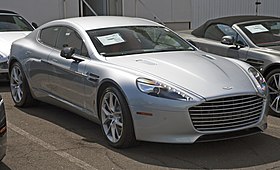
I think Jaguar gets primacy here, because their first car that looked a little like this dates from 1996 and the 2 door XJR came out in 2007 with almost exactly this shape. Much of their present line looks pretty similar.
From a glance, the Tesla, Audi, Jaguar and Aston Martin are indistinguishable, especially from the side or rear quarter.
Except for the Fusion and the 2 door Jaguar, these are all big cars.
Aston Martin has announced a fully electric version of the Rapide, with 200 mile range. It costs more than twice what the Tesla does. It's not clear whether they'll adopt Tesla's Superchargers or go with the CCS Combo charger that the EU is pushing.
The Fusion is available in a Plug-In Hybrid version.
The price of the Audi, Tesla and Jaguar are pretty similar
06 August 2015
The Republican Field
We're about to see the first culling of the absurd GOP presidential field. Not one of these clowns has a clue about Foreign Policy, Economics or any of several other important topics, and most have presided over at least one catastrophe bad enough to bring the career of someone in a real political party to a screeching, permanent halt. Andy Borowitz has a particularly clear-eyed view of it.
Let's see. We have a reality TV star who was the son of a wealthy real estate mogul and has been able to leverage the extraordinary advantages he was born with into several bankruptcies.
We have a governor who screwed up so badly that a recall election was petitioned for, and run. A few weeks before the recall, he was losing badly. But through gigantic spending and one exceptionally slick and dishonest ad by the Koch brothers later, he managed to squeak by. His policies have significantly damaged his previously fairly successful state...the state next door, with weaker fundamentals but a democratic governor, is doing far better economically. He would be the flagbearer for extreme corruption, except:
We have the governor who presided over massive election fraud in the stealing of the presidency 15 years ago. His term coincided with a massive real estate bubble unleashed by deregulation--much of it presided over by the president he foisted on us--and he left office just in time for the bubble to collapse into the worst recession in 70 years. Therefore he thinks he knows something about economics. His forays into foreign policy discussion have been equally embarrassing. His team is essentially the same team that backed off watching for terrorists and opened the door to 9-11, caused the disaster in Iraq, and hyped the the real estate bubble.
We have a retired governor who doesn't understand the principle of separation of church and state and would like to turn us into a theocracy. He's actually pretty honest about his principles although he doesn't understand why the the founders were so dead set against them. He doesn't know that, or much else, either, although he plays an OK Bass.
We have the two Cubans. One of them is doing a good job of mostly following along with his party's "leadership", which is probably the best way to the front of the pack, but he speaks to the incompetence wing of the party and as far as I can tell, has never done anything of real consequence. His tax cuts while he was speaker of the state house have caused terrible budget problems, but that doesn't distinguish him from any other republican leader.
The other Cuban is slicker, and more openly corrupt, but plainly even less competent. He thinks any media attention is good. If the attention comes from a consequential screw-up or throwing sand in the gears, so much the better.
We have a retired and apparently successful surgeon who somehow managed to get into medical school without understanding one of the most basic principles of biology: evolution
We have a currently serving governor who has bullied and terrorized his state's population so badly that his approval less than a year after his reelection is in the 20s. Several of his close allies are under indictment, several of whom are clearly stepping up to protect their leader, and it seems unlikely he'll make it all the way to next November without being under indictment himself.
We have another physician who is the son of a perennial crackpot candidate. He disagreed with the board which certifies the competence of his class of surgeons, so he used his political connections to create a new certification board. I have no idea if he's competent at his old job. He managed to get elected senator, where he is proving his incompetence. He is more honest than some of these guys, but no smarter. He seems to believe in his dad's crackpot economic theories.
We have the current governor of an important swing state. He seems to be the most competent of the pack, although this is an incredibly low bar. He gives lip service to most of the bad ideas of his party.
At the kids table, we have:
A former governor who thinks the way to show his brain power is to wear glasses and challenge the front runner to a pull-up contest. He is under indictment already. We've had numerous regional politicians who have come back after being convicted of a crime, but this is first for a presidential candidate.
A current governor who does a great Alfred E Newman impersonation. That really is the best thing about him. He did a "rebuttal" to the president's state of the union a few years back and he totally embarrassed himself. In a better party, his career would have been over before he got a chance to bankrupt his state.
A former senator who would like to turn us into a theocracy and actually understands enough about how the legal system of this country works that he might make some progress at it were he to have the chance. He doesn't actually know much about the founding principles of his own religion, either.
A former CEO who came very close to running one of the great high tech companies into the ground, before she was deservedly fired.
And many more. There actually are over 30 declared GOP candidates, but the media only lists 17. Not one is really credible, although three of them have unconscionably large amounts of money to spend.
Subscribe to:
Posts (Atom)